How Shipping and Customs Duties Change When the Seller’s Country Differs From the Actual Shipping Country
The country shown beside an online seller’s name does not tell you everything about shipping or customs charges. A seller may be registered in one country, store the product in another and sell an item manufactured somewhere else entirely.
The most important question is not simply, “Where is the seller located?” You need to establish three separate facts:
- Where the seller operates.
- Where your package will be dispatched.
- Where the product legally originates for customs purposes.
The dispatch location usually has the greatest effect on delivery time and whether the parcel crosses a border on its way to you. The product’s country of origin, together with its classification, customs value and your destination country’s rules, usually matters more when calculating import duty.
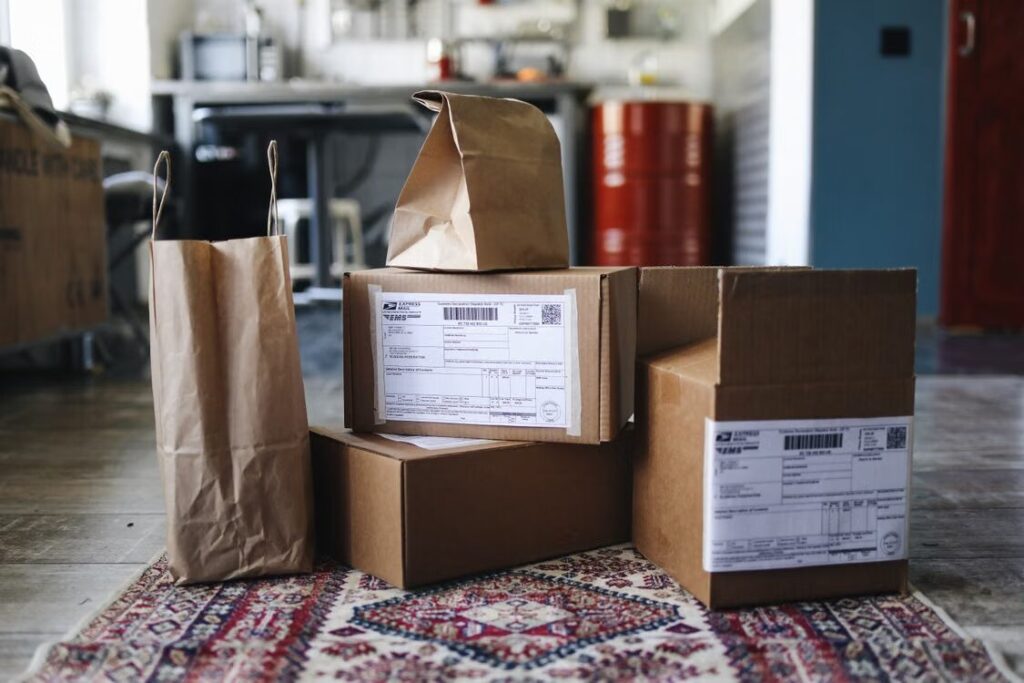
Three Different Locations Determine Three Different Costs
The most critical mistake buyers make is assuming that the country where a seller is registered tells you anything meaningful about shipping, taxes, or duties. It doesn’t.
Consider this realistic scenario: A seller registered in the United States operates a warehouse in China and sells headphones manufactured in Vietnam to a customer in South Korea. Which country matters for customs purposes?
The answer is: all three matter, but in different ways.
The seller’s registration location explains how the business operates and where customer service might be based. The dispatch location – where your package actually departs from – determines whether customs procedures apply at all and how quickly your package arrives. The product’s country of origin determines which tariff codes, duty rates, and trade agreements apply when your shipment enters South Korea.
For Korean imports, this distinction is especially important because different dispatch routes qualify for different duty thresholds. A product shipped directly from the United States qualifies for different tariff treatment than the same product shipped from a Chinese warehouse, even if the seller’s official address is in the United States.
Why Warehouse Location Changes Everything for Korean Buyers
A seller might display “United States” on their profile while actually dispatching your order from a warehouse in China. This is common among large e-commerce platforms that operate regional fulfillment centers.
When a package is dispatched from the United States, it enters South Korea as a direct international shipment. When the same product is dispatched from China, it follows a different customs route. The difference affects both the duty threshold and the type of customs clearance your package requires.
Korean Customs applies different duty exemption limits depending on the dispatch origin. Most overseas personal purchases qualify for exemption when the declared value is under 150 USD. However, items dispatched from certain origins – particularly those qualifying for specific trade agreement treatment – may have higher exemption limits. Direct shipments from the United States, for example, may qualify for different treatment than shipments arriving through third-country consolidation.
This means that claiming “I bought it from a US website” doesn’t guarantee favorable duty treatment. What matters is where customs records show the package actually originated.
Before completing a purchase, verify the actual dispatch location by checking the product page for labels like “Ships from,” “Warehouse location,” or “Dispatches from.” Some sellers clearly state this information, while others bury it in their fine print or only reveal it after you add the item to your cart.
Calculating the Real Duty: Classification and Declared Value Matter More Than Location
Many buyers believe that if a product stays under a certain dollar amount, they won’t owe customs duty. This is partially true but dangerously incomplete.
Korean Customs doesn’t calculate duty based only on the product price you paid. Instead, they calculate it based on the “customs value,” which includes the product price plus international shipping, insurance, and certain other costs directly attributable to bringing the good into Korea.
If your headphones cost 100 USD and international shipping cost 25 USD, the customs value is 125 USD. If the total stays under 150 USD, you likely won’t pay duty on this particular shipment. But if you’ve bundled multiple items together or if the seller included additional services in the price, the customs value might exceed the threshold.
What makes this more complicated is that different product categories are classified under different tariff codes. Two items with the same price and origin might face completely different duty rates because they’re classified differently. Clothing, cosmetics, food products, and electronics each have their own tariff codes and potentially different inspection requirements.
The product name displayed on the sales page is not necessarily the name used for customs purposes. Customs authorities examine the actual declared name, quantity, intended use, and product composition when determining the applicable tariff code and duty rate. This means a “facial cream” might be classified as either cosmetics or pharmaceuticals depending on its declared ingredients, leading to significantly different duty calculations.
Additionally, if your purchase involves a seller in one country and dispatch from another, certain inland transportation costs, warehouse fees, and fulfillment charges may be included or excluded from the customs value depending on the commercial terms used. Understanding these costs requires examining the seller’s delivery terms, not just the displayed price.
FTA Benefits Require Proper Documentation and Origin Verification
Many buyers mistakenly believe that if they purchase from a seller in a country with which Korea has a free trade agreement, they automatically receive preferential tariff treatment. This is incorrect.
FTA benefits only apply when the product satisfies the agreement’s strict rules of origin. Simply dispatching an item through an FTA – partner country doesn’t make that item eligible for preferential treatment. A product manufactured in China and stored in a South Korean warehouse does not automatically qualify as South Korean – origin merchandise. To claim FTA benefits, the product must meet the specific production or value – added requirements established by the FTA agreement itself.
When FTA treatment is claimed, Korean Customs may request supporting documentation such as a certificate of origin, origin declaration form, or shipping documentation proving that the product meets the agreement’s requirements. Without proper documentation, Customs can deny the preferential rate and apply standard duty rates instead.
Before assuming you’ll receive FTA treatment, check whether the seller provides the necessary origin documentation and whether the product actually qualifies under the agreement’s rules. The Korean Customs Service provides tools to verify FTA eligibility and required documentation, but this verification must happen before you pay, not after your package arrives.
HS Codes and Product Categories Create Unexpected Duty Differences
Here’s a fact many buyers don’t realize: two items dispatched from the same country on the same day can face completely different tariff treatment simply because they’re classified differently under the Harmonized System (HS Code).
Clothing, electronic devices, health supplements, cosmetics, and food products each occupy different positions in the tariff classification system. Even within categories, specific product types can face import restrictions, additional inspections, or substantially higher duty rates based on their HS code.
This is crucial because the product name on the sales page might not match the name used in customs declaration. A “facial serum” might be declared as cosmetics under one HS code or as pharmaceutical under another, completely changing the duty calculation. The quantity, intended use, and ingredient composition become more important than the marketing name when Customs decides the applicable tariff code.
Some product categories face restrictions that have nothing to do with tariff rates. Certain cosmetics, health supplements, and food items require additional documentation, inspection, or may face limited import quantities. These restrictions apply regardless of the product’s origin or price.
Before ordering, research whether your specific product category faces any import restrictions or unusual duty treatment. The Korean Customs Service provides searchable tariff information, but this research requires using the correct product classification, not just the product’s marketing name.
Shipping Terms Determine Who Pays Import Costs: DDP, DAP, and DDU
When you see “free shipping” displayed at checkout, that statement describes only the international transportation cost. It says nothing about whether customs duties, import taxes, or brokerage fees are included in your total payment.
International commerce uses standardized terms – DDP, DAP, and DDU – that clearly define who pays for what. Understanding these terms prevents unpleasant surprises at delivery.
DDP (Delivered Duty Paid) means the seller has agreed to cover all import taxes, duties, and customs clearance fees. The price you pay at checkout includes everything. You won’t owe additional money when the package arrives. This is the most seller-favorable option from a buyer’s perspective, but many sellers won’t offer it because of the unpredictable costs.
DAP (Delivered at Place) means the seller pays transportation costs but not import duties or taxes. You’ll owe these charges when the package arrives. DDU (Delivered Duty Unpaid) means you’re responsible for both transportation and import costs, though the seller may have already paid for initial shipping.
The problem is that sellers don’t always use these formal terms. Instead, they might use phrases like “duties prepaid,” “recipient responsible for import charges,” or simply include nothing in their shipping description. The absence of clear language often means the seller expects the buyer to pay for any duties that arise.
Before completing a purchase, determine the exact shipping term and whether it covers duties. If the seller cannot clearly explain whether duties are included, treat the checkout total as incomplete. Either budget for potential additional charges or choose a different seller who explicitly states that duties are prepaid and included in the final price.
The Real Total Cost: What to Calculate Before Purchasing
Most buyers compare prices between sellers by looking only at the displayed product price. This is the most expensive mistake in international shopping.
Calculate your real total cost by including the product price, shipping charge, estimated customs duty based on the product’s likely tariff classification, import VAT or goods and services tax, any brokerage or customs clearance fees, currency conversion costs, and potential return shipping fees if you need to send the item back.
Consider two sellers offering the same product. The overseas seller might be $20 cheaper initially, but that price assumes no customs charges, no brokerage fees, and domestic return options. A regional seller might have a higher displayed price but provide a duty-paid total, faster delivery, and a local return address, making it the genuinely cheaper option when all costs are included.
Be especially cautious with dropshipping sellers. The storefront might appear to operate locally while a third party actually ships the item directly from another country. Confirming the actual dispatch location, product origin, and import charge policy before paying is more reliable than trusting the seller’s profile location or the website’s domain name.
The Korean Customs Service provides a pre – calculation tool where you can estimate duties based on product category, origin, and value. Using this tool before purchasing helps you understand your true total cost and identify which sellers are actually offering better prices when all fees are included.
Understanding Your Rights After Arrival
When your package arrives with unexpected customs charges, understanding the calculation helps you decide whether to pay or file a dispute.
Request a detailed customs declaration and tariff classification from the customs broker or the delivery service. If you believe the product has been misclassified or overvalued for duty purposes, you can file a challenge with Korean Customs within the specified timeframe.
Most importantly, keep all transaction records, shipping documentation, and correspondence with the seller. If duties were supposed to be prepaid and weren’t, or if the seller made false statements about origin or value, this documentation supports your claim against the seller.rage fees or a carrier’s customs-processing charge. Conversely, a marketplace may collect some taxes at checkout, meaning the amount due on delivery is lower or zero.
The country shown next to a seller’s name tells you almost nothing about what you’ll actually pay. Instead, verify the dispatch location, research the product’s tariff classification, calculate the customs value including all applicable fees, confirm the shipping terms, and determine whether the final total cost truly represents a good deal compared to local alternatives.
Your preparation time before purchase saves you money and frustration after delivery.